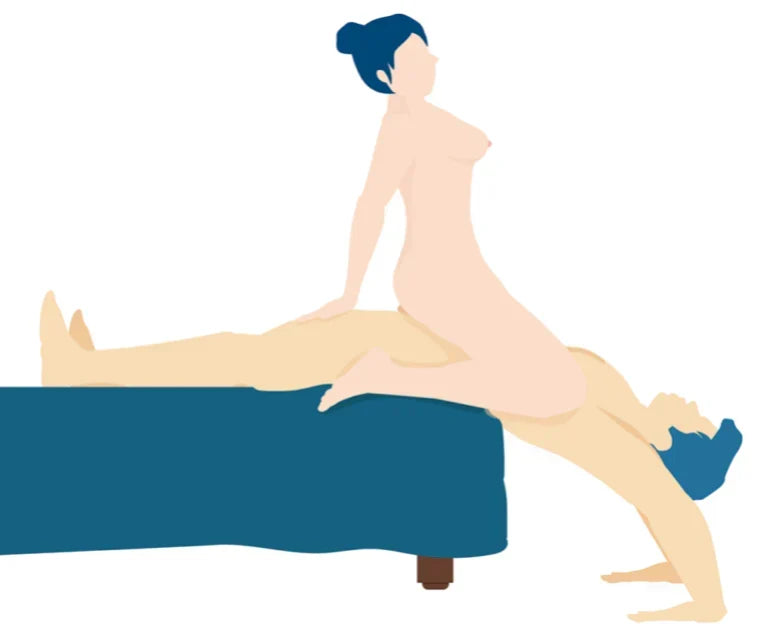

The Lotus sex position is a face-to-face seated position known for close body contact, eye contact, and slow, controlled movement. Instead of focusing on speed or large movements, Lotus gives both partners more opportunities to stay connected, communicate, and adjust their position as they go.

One partner sits upright while the other straddles their lap, facing them. The seated partner may keep their legs crossed, loosely bent, or extended, depending on what feels comfortable.
Because Lotus keeps the bodies close together, it can be a good option for couples who want a slower, more intimate experience rather than a position centered on fast or deep movement.
What Is the Lotus Sex Position?
The Lotus sex position is a seated, face-to-face position. One partner sits upright while the other sits on their lap and faces them.
The classic version is often shown with the seated partner sitting cross-legged and the partner on top wrapping their legs around the seated partner. However, neither of these details is essential.
The most important part of the Lotus position is the close, face-to-face setup.
This makes it easy to:
-
Maintain eye contact
-
Kiss and embrace
-
Talk and communicate
-
Adjust the angle of the hips
-
Control the pace
-
Stay physically close throughout the experience
Lotus also does not have to involve penetration. Couples can adapt the position to their own bodies, preferences, and boundaries.
Why Do People Like the Lotus Position?
One of the main reasons people choose Lotus is the sense of closeness it creates.
Unlike positions where partners are facing away from each other or frequently separating their bodies, Lotus keeps the torso and pelvis relatively close. This can make communication and small adjustments easier.
1. Face-to-Face Intimacy
The upright position naturally allows partners to look at each other, kiss, embrace, and communicate.
For couples who enjoy emotional connection as part of intimacy, this can make Lotus feel particularly personal.
You can also experiment with synchronized breathing, gentle touching, or simply staying still for a moment rather than treating the position as something that needs constant movement.
2. More Control Over Movement
Lotus generally works better with slow rocking, grinding, and small controlled movements than with long thrusts.
The partner on top can adjust their hip position, angle, and pressure relatively easily. Both partners can also communicate in real time if something feels uncomfortable or needs to change.
3. Close External Stimulation
Because the pelvises remain relatively close, some people may find that rocking or grinding creates useful external stimulation.
Everyone's anatomy is different, so there is no single angle that guarantees a particular sensation. Small changes in posture can make a noticeable difference.
A compact external vibrator can also be incorporated when there is enough room and both partners are comfortable using one.
4. Easy Communication
Face-to-face positions make it easier to communicate verbally and nonverbally.
Instead of guessing whether your partner is comfortable, you can ask, adjust, slow down, or stop when needed.
This is especially useful when trying a new position for the first time.
How to Do the Lotus Sex Position Step by Step
You do not need to reproduce a textbook version of Lotus perfectly. Comfort and stability are more important than appearance.
Step 1: Create a Stable Base
The seated partner should sit on a stable surface such as a bed or firm mattress.
They can sit cross-legged if that feels comfortable, but loosely bent or partially extended legs are also fine.
For beginners, leaning the upper back against a headboard or wall can provide additional support and reduce strain on the lower back.
Step 2: Straddle Face-to-Face
The second partner faces the seated partner and carefully straddles their lap.
Start with the knees supported by the bed instead of immediately wrapping the legs tightly around the other person's body.
Stay close enough for comfortable body contact while leaving enough space to adjust the hips.
Step 3: Find a Comfortable Alignment
If penetration is part of the experience, take time to find a comfortable pelvic position before beginning.
Small changes in torso angle or seated height can make alignment easier.
If the angle feels uncomfortable, pause and reposition rather than trying to force the movement.
Step 4: Find a Comfortable Hold
Partners can place their arms around each other's shoulders, waist, or upper back.
The embrace should provide balance and closeness rather than force either person's spine into an uncomfortable position.
The partner on top can wrap their legs around the seated partner if this feels natural. If it creates pressure in the knees, hips, or ankles, simply keep the knees supported on the mattress.
Step 5: Start With Small Movements
Begin with gentle rocking.
Once both partners feel stable, you can experiment with small circular movements or grinding.
Lotus usually provides less space for large movements, so trying to use long, fast strokes can make the position harder to control.
Step 6: Change Position Before Fatigue Sets In
Do not wait until your legs become completely numb or uncomfortable before moving.
If you notice increasing pressure, cramping, tingling, or fatigue, loosen the legs and change position.
There is no requirement to stay in Lotus for a specific amount of time.
How to Move in the Lotus Position
The mechanics of Lotus are different from positions that rely on large forward-and-back movements.
Rocking
Rocking is one of the simplest ways to move in Lotus.
Keep the upper bodies relatively close and move the pelvis gently forward and backward.
Small movements make it easier to maintain balance and stop quickly if something feels uncomfortable.
Grinding
Grinding keeps the pelvises close together while one or both partners make small forward, backward, or circular movements.
For some people, this close contact is one of the defining features of Lotus.
Small Vertical Movements
If there is enough room, the partner on top can add limited rising and lowering movements.
However, this should not require repeatedly lifting the entire body with the arms or legs.
If the movement creates slipping, awkward angles, or fatigue, return to gentle rocking.
Let One Person Lead
Beginners may find it easier if one partner controls the main pelvic rhythm while the other focuses on balance and following.
Once both partners become comfortable, they can move together.
The goal is not to reproduce a particular rhythm. It is to find a movement that works comfortably for both people.
Lotus Variations for Different Bodies
The classic Lotus position is only one version.
Small changes to leg placement, back support, and torso angle can make it easier for people with different flexibility levels or body proportions.
Supported Lotus
The seated partner can lean against a headboard, wall, or firm couch back.
This reduces the amount of effort required to keep the upper body upright and can be particularly helpful for beginners.
Uncrossed-Leg Lotus
The seated partner does not have to sit cross-legged.
They can keep their legs loosely bent or extend them forward.
This can reduce pressure around the knees, ankles, and hips.
Open-Knee Lotus
Instead of folding the legs tightly underneath the body, the seated partner can allow the knees to open naturally.
This creates more space around the pelvis and may make alignment easier.
Lean-Back Lotus
Either partner can slightly change their torso angle.
The partner on top may lean back and use their hands for support, while the seated partner remains upright.
Move gradually because changing the angle can also change pressure and sensation.
Lotus With a Height Difference
A height difference does not necessarily prevent couples from trying Lotus.
Once both partners are seated, pelvic alignment is generally more important than overall height.
If the positioning feels awkward, adjust seated height with stable, firm support rather than using loose pillows that can shift during movement.

Common Lotus Position Problems and Comfort Fixes
Lotus can look simple, but holding the body in one position for too long can create pressure in the hips, knees, legs, or lower back.
Here are some common problems and practical adjustments.
Knee Pressure
If the seated partner feels pressure from sitting tightly cross-legged, uncross the legs or allow them to extend farther forward.
Legs Become Numb
Numbness or tingling is a signal to change position.
Loosen the legs, pause, and allow normal circulation to return before continuing.
Lower-Back Fatigue
Use a stable headboard or wall for support.
A firm cushion behind the lower back can also help if it remains stable during movement.
Difficult Alignment
If the pelvises do not line up comfortably, adjust the torso angle, knee position, or seated height.
Do not try to overcome an uncomfortable angle with more force.
Not Enough Room to Move
A very tight embrace can actually make Lotus harder.
Loosen the arms and legs slightly and create a little more space around the hips.
Too Much Friction
Repeated movement can create friction, particularly when there is not enough lubrication.
Slow down, change the angle, and consider using a compatible lubricant.
Does the Lotus Position Require Flexibility?
Not necessarily.
The traditional illustration of Lotus often shows both partners in a tightly folded position, but this is not required.
If sitting cross-legged is uncomfortable, the seated partner can:
-
Keep the legs loosely bent
-
Extend the legs forward
-
Open the knees
-
Lean against a stable surface
The partner on top can also keep their knees supported by the bed instead of wrapping both legs around the seated partner.
Comfort matters more than copying the traditional shape.
Using Lubricant With the Lotus Position
Lubricant can be useful when Lotus involves repeated rocking or grinding because it can reduce unwanted friction.
A water-based lubricant is a practical option for many situations and is generally compatible with many common condoms and sex toys.
If you are using a silicone-based toy, check the lubricant manufacturer's compatibility guidance before using a silicone lubricant.
The goal is not to make the movement faster. Lubricant simply helps keep movement comfortable and reduces unnecessary friction.
Can You Use a Vibrator With the Lotus Position?
Yes. A small external vibrator can be incorporated if there is enough room and both partners are comfortable with it.
Because Lotus keeps the bodies close together, compact or wearable designs may be easier to use than larger toys.
For couples who already enjoy vibrators, Lotus can provide an opportunity to combine close body contact with external stimulation without significantly changing the basic position.
Explore our Vibrators collection for compact options that can fit into different intimate positions.
Can Lotus Work With a Dildo?
Lotus can be adapted for different forms of sexual activity, including the use of a dildo.
If a toy is used for penetration, take time to establish comfortable alignment before beginning movement.
A toy should never be forced into an uncomfortable position, and lubrication should be appropriate for both the toy material and the type of activity.
For couples interested in experimenting with different positions, our Dildos collection offers different shapes and sizes to consider.
Lotus and Anal Play
Lotus can also be adapted for anal play, but comfort and control become particularly important.
Because the position is face-to-face, partners can communicate easily and observe each other's reactions.
If anal penetration is involved:
-
Use plenty of compatible lubricant
-
Start gradually
-
Keep movement controlled
-
Communicate throughout
-
Stop if there is sharp or persistent pain
-
Use appropriate barrier protection when relevant
If a penis or toy moves from anal contact to vaginal contact, use a new condom or clean the toy appropriately first to reduce the transfer of bacteria.
Consent and Safety With the Lotus Position
Lotus is not automatically comfortable simply because it is considered an intimate position.
Both partners should be able to loosen their legs, change their angle, or stop without difficulty.
Pain Is a Reason to Reposition
Muscle effort can be normal when trying a new position, but sharp pain should not be treated as part of the experience.
Stop and change position if there is:
-
Sharp or increasing pain
-
Persistent numbness
-
Tingling
-
Significant joint pressure
-
Cramping
-
Loss of control or stability
If either partner has an existing injury, recent surgery, or movement restriction, stay within the guidance provided by a healthcare professional.
Consent Continues Throughout
Agreeing to try Lotus does not automatically mean agreeing to every movement, depth, toy, or type of sexual activity.
Check in when changing the angle or introducing something new.
A simple question such as “Is this comfortable?” can make adjustments much easier.
Pregnancy and STI Protection
The Lotus position does not prevent pregnancy or sexually transmitted infections.
If pregnancy is a concern, use an appropriate contraceptive method.
If STI protection is part of your safer-sex plan, use suitable barriers consistently and correctly.
Changing the position from lying down to sitting does not change the underlying risks associated with sexual contact.
Is the Lotus Sex Position Good for Beginners?
It can be, especially when modified for comfort.
For a first attempt, consider:
-
Use a stable bed or firm surface.
-
Support the seated partner's back.
-
Keep the legs relaxed rather than tightly crossed.
-
Start with small rocking movements.
-
Communicate frequently.
-
Stop or reposition if the knees, hips, back, or legs become uncomfortable.
The traditional cross-legged version is optional.
A supported or uncrossed-leg version may be much easier for someone who has limited hip flexibility.
Frequently Asked Questions About the Lotus Sex Position
What is the Lotus sex position?
The Lotus sex position is a face-to-face seated position where one partner sits upright and the other straddles their lap. It emphasizes close body contact, communication, and controlled movement.
Do you have to cross your legs in the Lotus position?
No. Crossing the legs is common in traditional illustrations, but loosely bent or extended legs can work just as well.
Is Lotus good for beginners?
Yes, when modified for comfort. Back support, relaxed legs, and small movements can make the position easier to learn.
Why is the Lotus position difficult to move in?
The bodies can become too tightly connected, leaving little room for movement. Loosening the legs and reducing the range of motion usually makes the position easier to control.
Does Lotus require flexibility?
Not necessarily. The classic version requires more hip flexibility, but supported, open-knee, and uncrossed-leg variations can make the position accessible to more people.
Can you use a vibrator during Lotus?
Yes. A compact external vibrator may work well when there is enough space for comfortable use.
Can Lotus be used for anal play?
It can be adapted for anal play, provided both partners are comfortable and appropriate lubrication, communication, gradual movement, and safer-sex practices are used.
Does the Lotus position reduce pregnancy or STI risk?
No. Body position does not provide contraception or STI protection. Use appropriate contraception and barrier protection when relevant.
What should you do if Lotus becomes uncomfortable?
Stop or reposition rather than pushing through discomfort. Loosen the legs, change the torso angle, add stable support, or switch to another position.

Final Thoughts on the Lotus Sex Position
The Lotus sex position is less about achieving a perfect pose and more about creating a comfortable face-to-face setup.
Its main characteristics are closeness, communication, slow movement, and the ability to make small adjustments without completely changing positions.
You do not need perfect flexibility or a textbook version of Lotus. Keeping the legs relaxed, supporting the back, using appropriate lubrication, and communicating throughout can make the position much easier to adapt.
Whether you are interested in trying Lotus for greater intimacy, experimenting with slower movement, or simply adding another face-to-face option to your routine, the most useful approach is to make the position work for your bodies rather than forcing your bodies to fit the position.